

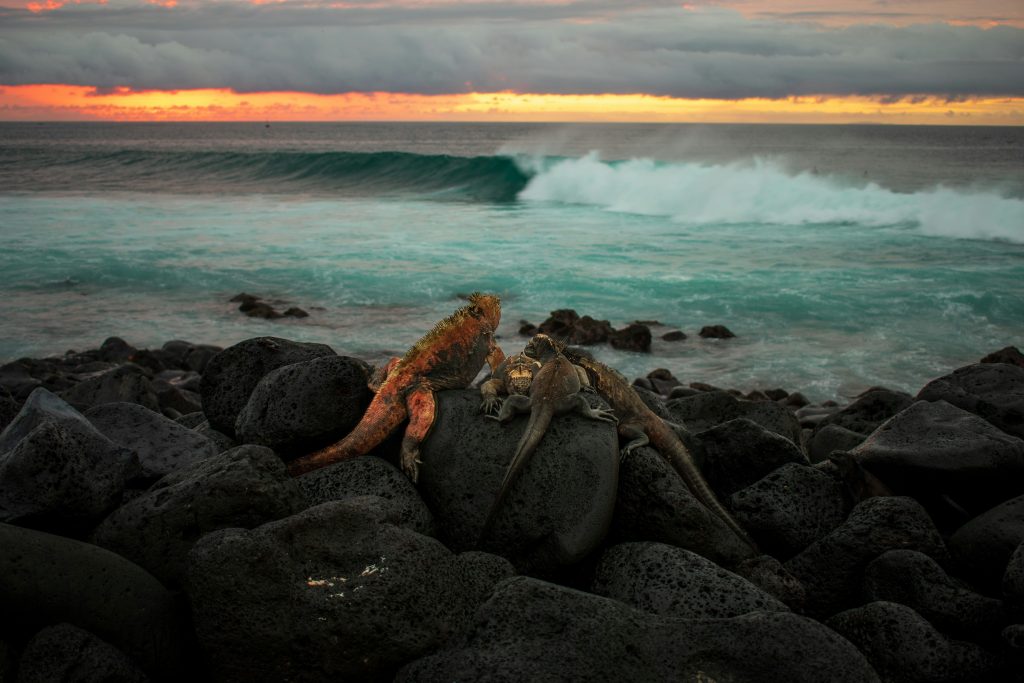
The Galapagos Islands, a remote volcanic archipelago is one of the most biologically diverse destinations in the world. It is home to some rare endemic species, volcanic landscapes and pristine beaches. It was only after the visit of British naturalist Charles Darwin’s and thereby his development of the theory of evolution, that the island became famous globally. Today, the Galapagos is visited by
nature explorers, wildlife enthusiasts, scuba divers, photographers and eco-tourists from all over the world. Here’s a complete guide to the Galapagos Islands that covers the top islands, best time to visit, wildlife experiences, things to do, travel tips, and everything needed to plan a memorable trip.

Table of Contents
Where Are The Galapagos Islands Located
The Galapagos Islands are located roughly 1000km off the coast of Ecuador in South America. These rugged volcanic archipelago in the Pacific Ocean are scattered over 20,000 square miles. The Galapagos Islands are geologically younger and more active in the west, while the east is older. Puerto Baquerizo Moreno located on the southwestern coast of San Cristóbal Island is its capital.
Key Geographical Features Of The Galapagos Islands
- It comprises 13 major islands, 6 smaller islands, and numerous islets.
- Of the 19 islands, 13 of them are volcanic.
- Stunning landscapes with large calderas, crater lakes, coastal mangroves, and stark lava fields.
- The island has been recognised as a UNESCO World Heritage Site since 1978.
- 97% of the total land mass is allotted for National Park and the remaining 3% of the land area is for human settlement.
- The island is shaped by three major ocean currents: Humboldt, Panama, and Cromwell currents.
History Of The Galapagos Islands In South America
The Galapagos Islands were formed 5–10 million years ago, but it was discovered only in the 16th century. Here’s a timeline of how the island has evolved over the years.
1535: The island was discovered by a Spanish Bishop Fray Tomás de Berlanga by chance when his ship drifted off course due to strong currents.
1683: It became a remote hideout for British buccaneers to repair ships and restock supplies while attacking Spanish ships.
1793: Major stop forwhalers for heavy whaling activity and to harvest tortoises for food.
1832: The Republic of Ecuador officially took possession of the archipelago.
1835: English naturalist Charles Darwin spent five weeks exploring the island and came up with the theory of evolution by natural selection.
1959: Ecuadorian government declared 97% of the land area as a national park.
1978: First ever site to be designated as the World Natural Heritage site by UNESCO.

How To Get To The Galapagos Islands
Galapagos Islands has two airports:
Seymour Airport (GPS) in Baltra Island
San Cristóbal Airport (SCY) in San Cristóbal Island
Quito and Guayaquil are two main gateways to the island. Major airports in both cities offer direct flights to the archipelago. Generally, these flights depart early in the morning, so you can spend at least one night in either of these cities.
Quito – Mariscal Sucre International Airport (UIO)
Guayaquil – José Joaquín de Olmedo International Airport (GYE)
Top Islands To Visit In The Galapagos
Only four of the 19 islands are inhabited by humans. Of the remaining islands some are strictly restricted to scientific researchers only, while some islands only allow boat-based viewing. The four inhabited islands are as below:
Santa Cruz Island
This lovely little island town is home to the archipelago’s largest human population. Puerto Ayora is the largest and most populated town here. The town has excellent restaurants, accommodations, tour operators and transportation links, making it a comfortable spot for island exploration.

Things To Do In Santa Cruz Island
- Learn about conservation efforts at Charles Darwin research station.
- Relax, sunbath or swim at Tortuga Bay.
- Visit the El Chato Giant Tortoise Reserve.
- Take a dip at Las Grietas.
- Book a day tour to North Seymour Island.
Also Read: Travel Guide To Santa Cruz Island In Ecuador
San Cristobal Island
San Cristobal Island is one of the easiest islands for travellers to explore. Efforts are on to make it the main hub for tourism, like Santa Cruz. This medium-sized town offers both wildlife encounters with cultural experiences.
Things To Do In San Cristobal Island
- Go diving and snorkelling through the two giant splits in the Kicker Rock.
- Watch hundreds of sea lions and Galapagos iguana in La Loberia beach.
- Understand the process of tortoise breeding at Galapaguera de Cerro Colorado.
- Learn about natural history and geology at the Interpretation Centre.
Isabela Island
For many travellers, Isabela Island (largest island in the Galapagos) is the highlight of their Galapagos journey as it has a different vibe in comparison with the other islands. The beautiful Galapagos beaches, quiet and sleepy vibe of the place are the top reasons for people to extend their stay at Isabela Island.
Things To Do In Isabela Island
- Hike to Sierra Negra Volcano, one of the largest active volcanic craters in the world.
- Go snorkelling at Los Tuneles, as it is one of the best spots for it.
- Catch the American flamingos when they come to feed at Flamingo Lagoon.
- Visit the Arnaldo Tupiza Giant Tortoise breeding centre.
- Walk through the expansive lava field called Tintoreras
Floreana Island
Floreana Island is one of the oldest and least populated (below 200 people) islands in the Galapagos. Travellers generally opt to go on a day trip rather than staying overnight as it is a very sleepy town. Endemic giant tortoises roaming about the place is the highlight of the place.
Things To Do In Floreana Island
- Go snorkelling at the Devil’s Crown.
- See the giant tortoise near the pirate caves.
- Explore, relax and unwind in the peaceful atmosphere.

Best Time To Visit
Galapagos is a year-round destination and the best time to visit depends on what you want to see and how you want to explore. To help plan better, let’s take a look at how the weather is in Galapagos throughout the year.
December To May – Warm And Sunny Season
Weather in the islands during this time is warmer and the sea is calmer, making it ideal for families and first-time visitors. The entire place looks green and fresh after the monsoons.
- Ideal conditions for diving and snorkelling.
- Mating season for green sea turtles and hatching tortoises.
- Best time for wildlife viewing.
- Clear water with better underwater visibility.
- Lush, green, and vibrant landscapes.
June To November – Cool And Dry Season
Weather in the islands during this time is cool due to the Humboldt Current that passes through the island. The current also brings with it nutrient-rich waters that attract marine life.
- Best time for viewing Galapagos penguins and whales.
- Rough sea which is preferred by adventure divers and wildlife enthusiasts.
- Spot sea lion pups, migratory whales and dolphins.
- Great weather for trekking to active volcanic sites like Sierra Negra.
Best Things To Do In The Galapagos Islands
- Snorkelling And Scuba Diving
- Kayaking And Paddleboarding
- Island Hopping
- Wildlife Photography
- Hiking through the volcanoes
- Spot wildlife on stunning beaches
Galapagos Cruises Vs Land-Based Tours
The only two ways of exploring the Galapagos is by taking a cruise or by taking a land tour. Let’s take a look at the pros and cons of both the Galapagos Islands Tours:
| Galapagos Cruises | |
| Pros | Cons |
| Access to remote and isolated wildlife areas | Not budget friendly |
| Can travel between islands at night | Seasickness possibilities are high |
| Make maximum use of time | Less contact with locals |
| Easy access to snorkelling and diving | No much of flexibility |
| Land-Based Tours | |
| Pros | Cons |
| Flexible and independent exploration | Limited access to remote islands |
| Nightlife and Local dining experiences | Less time for wildlife viewing |
| Can explore inhabited islands | Less time at most of the stops |
| Budget friendly | Place is often crowded |

Travel Tips For Visiting The Galapagos Islands
- Book your Galapagos tours and flights in advance as they tend to sell out fast.
- Follow all rules put forward by the Galapagos National Park.
- Avoid touching, feeding and maintain good distance from animals.
- Carry sunglasses, sunscreen, lip balm and a hat to protect from the equatorial sun.
- Pack lightweight dresses and comfortable footwear as there will be a lot of walking to do.
- Pack essential items like prescribed medicines, motion sickness medicine and a first aid kit.
- Carrying cash is highly recommended as ATMs are limited.
- Get binoculars and a camera to see and capture the incredible scenery and wildlife.
- The Internet can be slow or limited on some islands, be prepared for the same.
Sustainable Tourism In The Galapagos Islands
The Galapagos Islands are one of the most extraordinary wildlife destinations in the world. Hence, as responsible travellers it is our duty to protect the ecosystem by practising sustainable tourism. By doing so, we can help preserve the fragile environment and wildlife for the future generations. Listed below are few key points that will help protect the islands:
- Choosing eco-friendly operators that are recognized by the Galapagos National Park Directorate.
- Always book certified naturalist guides who have expert local knowledge.
- Follow all park and conservation rules strictly.
- Walk on designated paths and maintain at least 2 meters distance from wildlife.
- Avoid use of plastic.
- Pack biodegradable sunscreen and reef safe toiletries.
- Do not buy products made from animal derivatives like shell, corals, animal skin.
Suggested Reads: Month-By-Month Guide To The Best Places To Visit In South America
Final Words
From the high percentage of unique endemic species to unusual volcanic landscapes, from Darwin’s theory of natural selection to world-class diving sites, the Galapagos Islands offer unique experiences unlike anywhere else in the world. Whether you are a wildlife enthusiast, ecotourist or an adventure seeker, this pristine volcanic archipelago offers an unforgettable experience. When you go on your Galapagos vacation, do share your experience with us, we would love to hear from you.
FAQs
Good hiking shoes, hat, sunglasses, daypack, reusable water bottle, insect repellent, motion sickness medicines, lightweight and breathable clothing are a must pack for a trip to the Galápagos.
4 to 5 days is a good time to visit for first timers. For island hopping and wildlife experiences a minimum of 7 days is a must. People looking for a relaxed exploration, 10 to 12 days is recommended.
Marine iguana, Galapagos penguin, frigatebird, Galapagos sea lions, Galapagos giant tortoise, flightless cormorant, finches, Blue-footed booby and Great frigatebirds can be spotted on many islands in the Galapagos.
Puerto Ayora and Santa Cruz Island have many accommodation options to choose from. Most of the top accommodations have access to restaurants, shops, and attractions within walking distance.
Yes, it is mandatory to have a Transit Control Card (TCT) and a Galápagos National Park Entrance Fee to visit Galápagos Islands. One also needs to fill a biosecurity declaration online within 48 hours of travel.