

Are you ready to embark on a journey filled with adventure, culture, tradition, and exciting attrations? Let your explorer's spirit soar and make unforgettable memories as you explore the beauty of our diverse world.
Explore ExperiencesAustralia’s Great Barrier Reef is not just the world’s largest reef system but also the largest natural wonder of the world, so large that it can be seen from space. Just like its size, its vibrant underwater kingdom teemed with color and mystery is sure to amaze you. If the Great Barrier Reef is on your bucket list, do refer to this guide as this huge place can leave you overwhelmed with choices.
Table of Contents
What Is Great Barrier Reef In Australia And Why Is It So Special

Declared a World Heritage Site in 1981, the Great Barrier Reef Australia is the largest coral reef system in the world. The 2300 km of coastline offers an abundance of experiences unlike anywhere else in the world. It comprises around 900 islands, 2900 individual reefs, 1600 species of fish, 4,000 types of mollusk and 400 coral species that are simply astounding. Its breathtaking beauty, marine life and unique ecosystem makes it one of the must visit places on this planet.
History Of The Great Barrier Reef
It’s believed that the Great Barrier Reef was formed thousands of years ago due to the rising sea levels and flooded Shelf Sea. However the first person to discover it was a British navigator called Lieutenant James Cook, while sailing along the Australian coast. Since its discovery in the late 18th century, the Great Barrier Reef has played a significant role in the growth and development in the lives of Indigenous Australians. Initially the reef was their only source of income.
Major Access Points To The Reef

Due to its huge size the reef is accessible via multiple entry points along the Queensland coast. Some of the closest and major points of entry are Cairns, Port Douglas, Airlie Beach, Townsville, Bundaberg, Hamilton Island, Heron Island and Lady Elliot Island.
Best Time To Visit
It is very important that the weather is sunny and the water is clear to soak in the beauty of The Great Barrier Reef. Ideally the summer months between May–October is the perfect time to go. During this time the weather is cool and dry, there is excellent visibility and the water is crystal clear making it perfect to indulge in all aquatic adventures.
Spotting At The Great Barrier Reef

Since the reef is home to an incredible diversity of aquatic and marine life, the underwater views are very colorful, however spotting all of them together is quite impossible. But if lucky you can expect to see some of these mentioned below:
Clownfish: The famous movie “Finding Nemo” has made the Clownfish quite popular. These small fishes are bright-colored and generally found living in anemones.
Sharks: Over 135 species of sharks have made the great reef their home, so you are sure to spot some of them. The ones you are most likely to see are hammerhead shark, tiger shark, and grey reef shark.
Turtles: Turtles have made the Great Barrier Reef their home for hundreds of years, hence a lot of them can be seen swimming around the reef. The green turtle, leatherback, loggerhead turtle, hawksbill turtle, flat back and olive riley turtles are the six varieties of turtles found here.
Stingrays: Stingrays can be seen in different shapes and sizes. Some are flat, some are triangular in shape and some are diamond-shape. They are generally spotted at the bottom of the reef.
Best Ways To See And Experience The Great Barrier Reef

To see the extraordinary variety of marine life there are enormous ways to explore. Choosing the right option mainly depends on the skills and preferences of the individual. Listed below are some of the top ways to explore the Great Reef for both swimmers and non-swimmers.
Scuba Diving
There are many scuba diving operators with good safety records and accredited by PADI and SSI to choose from. This activity is physically demanding, hence make sure you are in good health before attempting the dive. For those who are not certified divers can consider taking a diving course while out on the reef. Some of the most popular diving spots are Ribbon Reefs, Agincourt Reef, Flynn Reef, Yongala Wreck and The Cod Hole.
Snorkeling
Snorkeling is another great way of seeing underwater miracles. If you are a non-swimmer and have no previous experience, this is the best option. Here you are allowed to float on top of the water, face down with the help of a breathing gear. The best spots for snorkeling are Agincourt Reef, Heron Island, Green Island, Low Isles and Fitzroy Island.
Glass Bottom Boat Tours
For non-swimmers this is one of the best ways to see the reef’s beauty. The bottom of the boat is fitted with see through glasses from where one can explore the underwater without actually getting wet. There are many tour operators that provide good tours with guides that share insights into the reef’s ecosystem through live commentary. The best place to experience this activity is Heron Island, Whitsundays and Green Island.
Scenic Flights
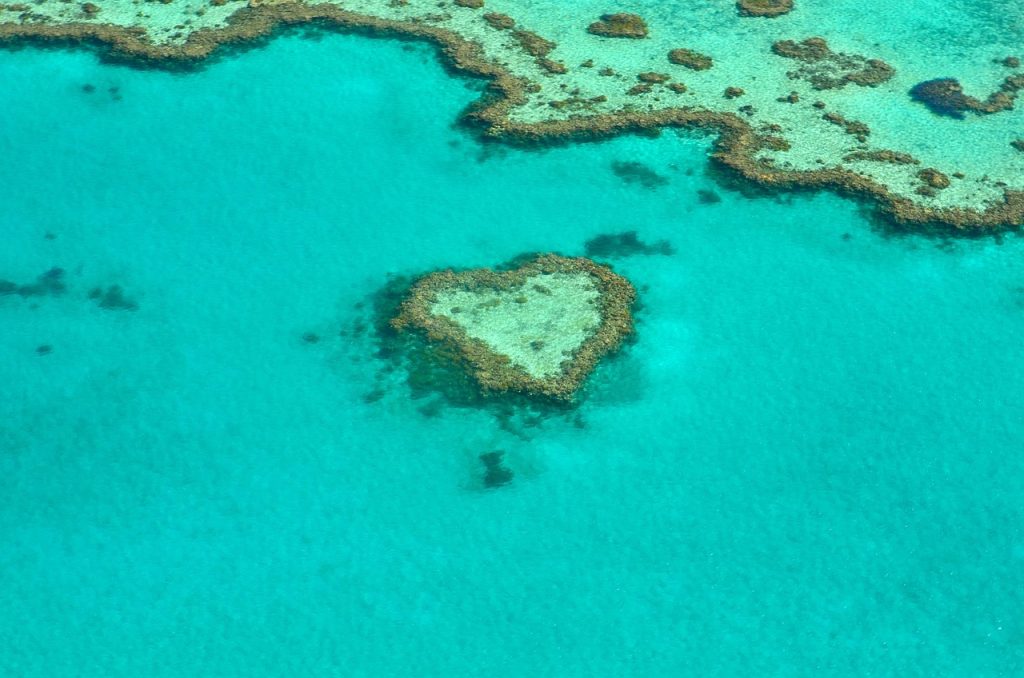
For breathtaking views of the Great Barrier Reef this is the best option. The reef’s vastness and beauty can be truly experienced only by flying above it. These tours are generally on a helicopter or small-plane which lasts for about 30 minutes to an hour. Aerial tours are expensive but it’s completely worthwhile for the unique experience it gives. Best places to book for this scenic ride are Cairns, Port Douglas and Airlie Beach.
Liveaboard Cruises
For the adventurous souls this is the best way to experience the Great Barrier Reef. The advantage of getting on this cruise is, one gets to eat, sleep, and scuba dive right from the boat. Access to remote reef sections is also possible with this cruise. Ribbon Reefs and Osprey Reef are places from where this extraordinary journey into the heart of the reef’s beauty begins.
Also Read: 8 Of The Most Visually Striking Coral Reefs From Across The World
Conclusion
Now that you know it all, go ahead and experience this remarkable destination with our guide. Exploring this natural wonder is truly worth it. Do share your experience with us in the comment section below.
FAQs
This massive coral reef system is located in the Coral Sea which lies off the coast of Queensland, Australia. It is so huge that the reefs are clearly visible from outer space.
Yes, the reef is under serious threat due to many factors such as climate change, destructive fishing practices, water pollution and human activities. Though it is removed from the “in danger” list, UNESCO still calls for urgent and sustained action to protect the reef’s fragile ecosystem.
At least 2-3 days are required to experience the Great Barrier Reef, however for a more relaxed experience, it’s recommended to go for a longer stay of 4-7 days.