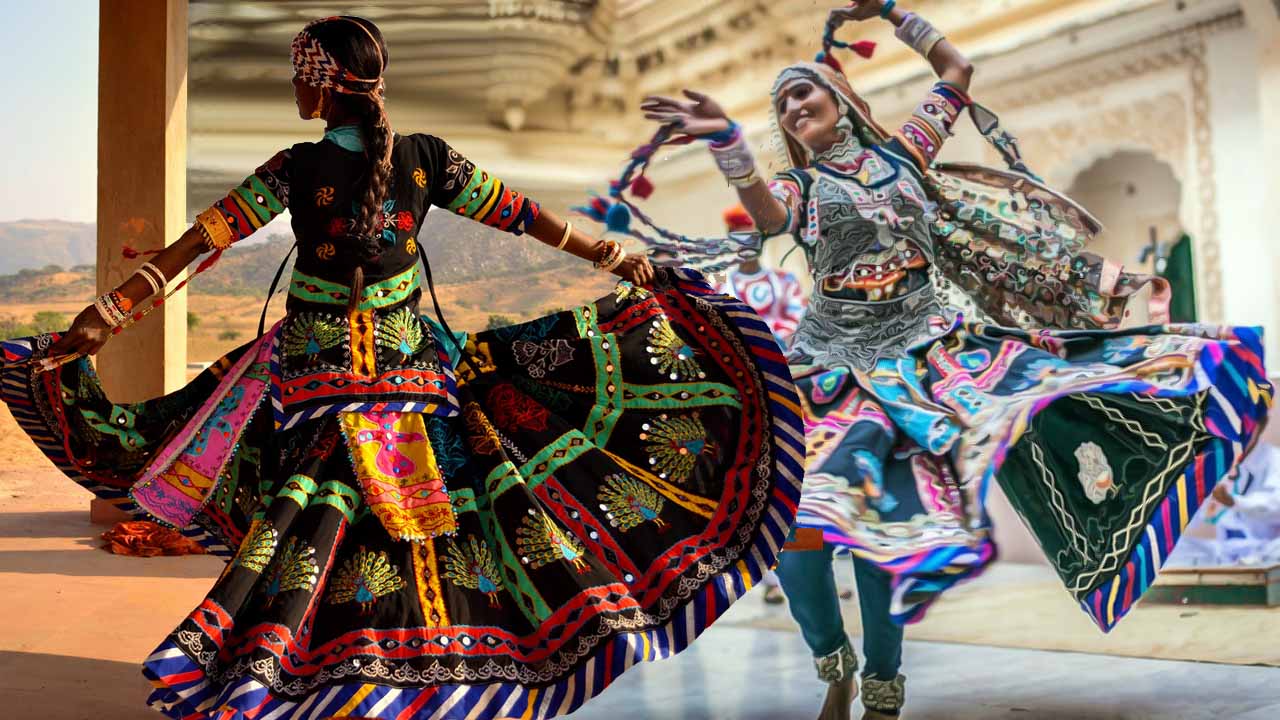

Rajasthan, located in the northwestern part of India is one of the country’s most culturally vibrant states. This place has been ruled by various kings, including the Marathas, Rajput, and even Muslim rulers, all of which have resulted in a diverse culture. Each region has its own distinctive form and style of folk dance, performed during festivals, weddings, and celebrations. This guide helps to understand the 11 most popular folk dances of Rajasthan, its origin, costume, and performance structure that define the state’s tribal, royal, and desert heritage.
Table of Contents
Traditional Folk Dances Of Rajasthan: History, Styles, And Festivals
1. Ghoomar: Rajasthan’s Most Famous Folk Dance
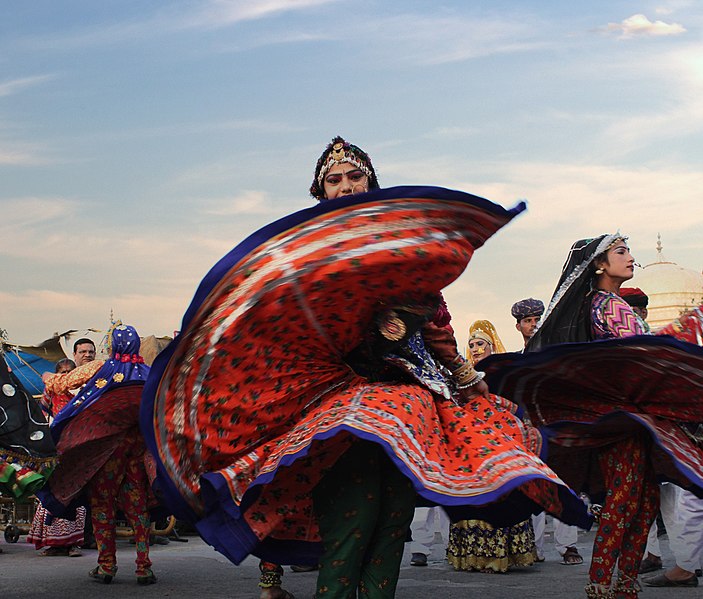
Origin: Bhil tribe
Costume: Ghagra (long swirling skirt), kanchli or choli (blouse) and odhani (veil)
Performance Structure: Swaying hands, clapping, and twirling
Popular In: Udaipur, Kota, Bundi, and Jodhpur Ghoomar is one of the most popular folk dances of Rajasthan performed by women on festivals and special events such as Holi, Teej, and the arrival of a newlywed bride at her marital house. The coordinated movement by the dancers and their whirling outfits, coupled with the upbeat rhythm and music, leave spectators mesmerised.
2. Kalbelia: UNESCO-Recognised Folk Dance
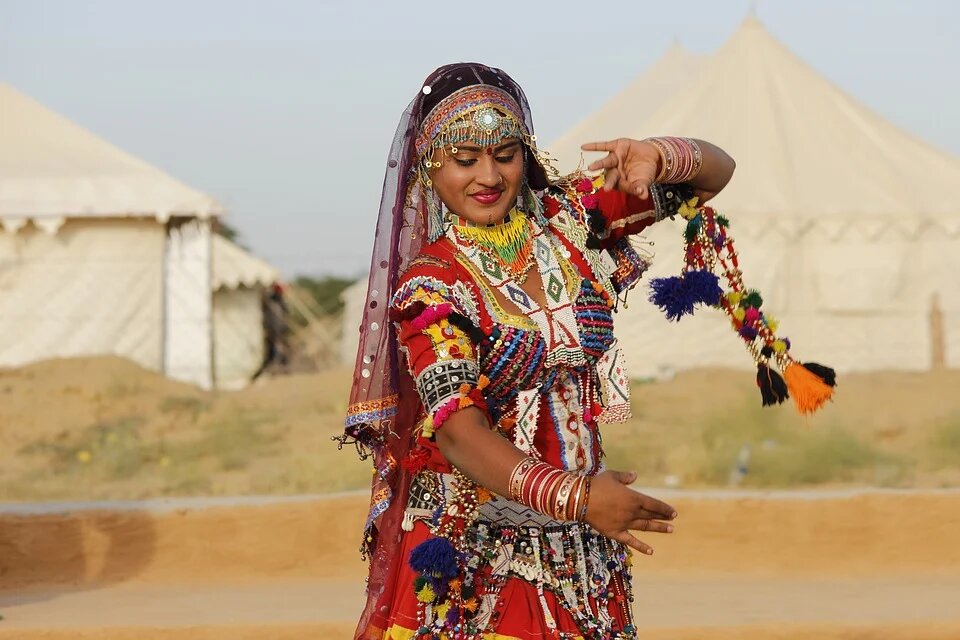
Origin: Kalbelia Tribal Community
Costume: Angrakhi (jacket-like garment), odhani (veil), and a black swirling ghagra (long skirt)
Performance Structure: Curl around each other to mimic the movement of a snake.
Popular In: Jodhpur, Jaisalmer, Bikaner, Barmer, Jalore, Jaipur, and Pushkar
Kalbelia (or Kalbeliya), a popular folk dance of Rajasthan is listed as a UNESCO Intangible Cultural Heritage. This dance form is also known as “Sapera Dance” or the “Snake Charmer Dance” since its movements are almost serpentine. The dances are set to music played by men using traditional instruments. The songs are based on stories taken from folklore and mythology.
3. Bhavai: The Balancing Act
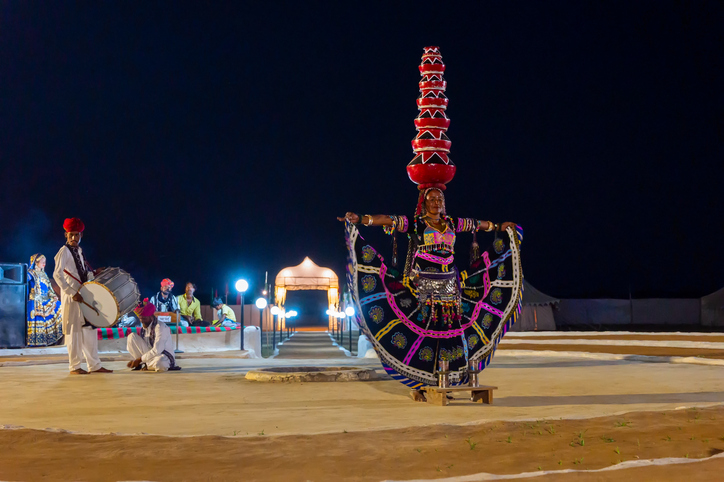
Origin: Kalbelia, Jat, Meena, Bhil, Kumhar tribal communities
Costume: Intricate embroidery, mirror work with bold colours
Performance Structure: Balancing earthen pots on the head
Popular In: Jodhpur, Jaipur, and Bikaner
Bhavai is a ritualistic and popular folk dance of Rajasthan performed by female dancers. It takes many years to master this dance, which involves women balancing eight to nine earthen pots or brass pitchers on their heads as they dance and twirl with their feet gripping the sides of a glass or a brass plate. This dance form symbolises strength, skill, and endurance.
Also Read: 12 Things you must not miss when visiting Rajasthan
4. Kachhi Ghodi: Mock Fights
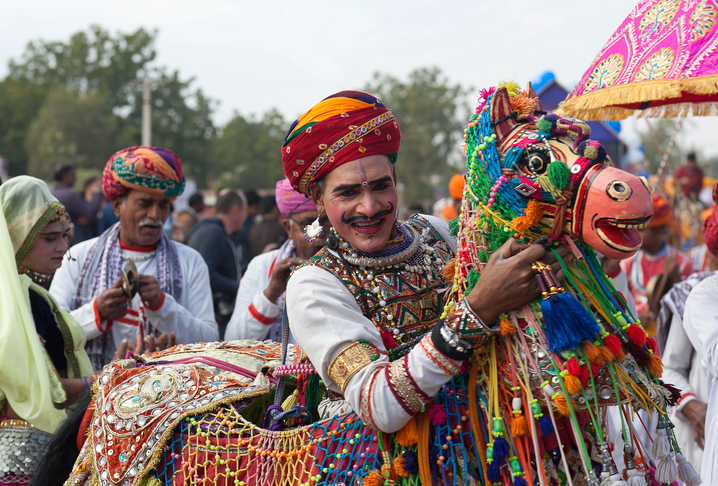
Origin: Shekhawati Region
Costume: Dhoti, with turbans and kurtas
Performance Structure: Dances in two rows moving back and forth, swirling in circles.
Popular In: Shekhawati region, Jaipur and Udaipur
Kachhi Ghodi is a famous Rajasthani folk dance performed by Rajasthani men. The dance enacts tales of local bandits, conveyed through mock sword fights. Men pretend to ride a decorated dummy horse and enacts stories of local bandits and warriors. The whole dance is meant to be a symbolic show of chivalry and bravery. It’s mostly performed during weddings or social events.
5. Gair: Performed During Festivals
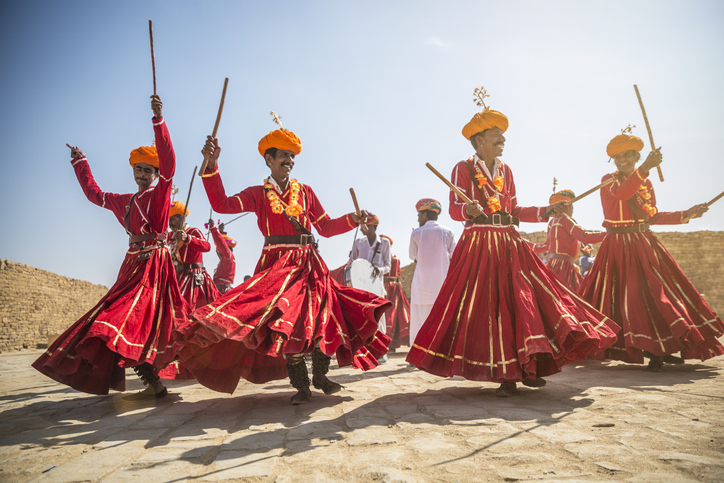
Origin: Bhil community
Costume: Men (full-length tunic skirt carrying a stick, sword, and arrow) women (ghagra-choli)
Performance Structure: Move in clockwise and anti-clockwise directions, swinging their arms.
Popular In: Marwar and Shekhawati regions
Gair is one of the most famous folk dances of Rajasthan performed by both men and women. Folk music is played on various traditional instruments. This dance form is performed during famous festivals like, Holi and Janmashtami. Variations include Dandi Gair and Geendad.
6. Chari: Pot Dance

Origin: Saini community
Costume: Colorful Lehenga (skirt), choli (blouse), and an Odhani (veil)
Performance Structure: Dance while balancing brass pots (chari) with a lit lamp on the head.
Popular In: Ajmer and Kishangarh Chari is a traditional folk dance form of Rajasthan where women dance while balancing brass pots (chari) with a lit lamp on their heads. They also perform different stunts around the floor with ease. This dance form is performed on special occasions like weddings and festivals. Musical accompaniments include the nagada, dholak, and harmonium.
7. Kathputli: Famous Puppet Dance
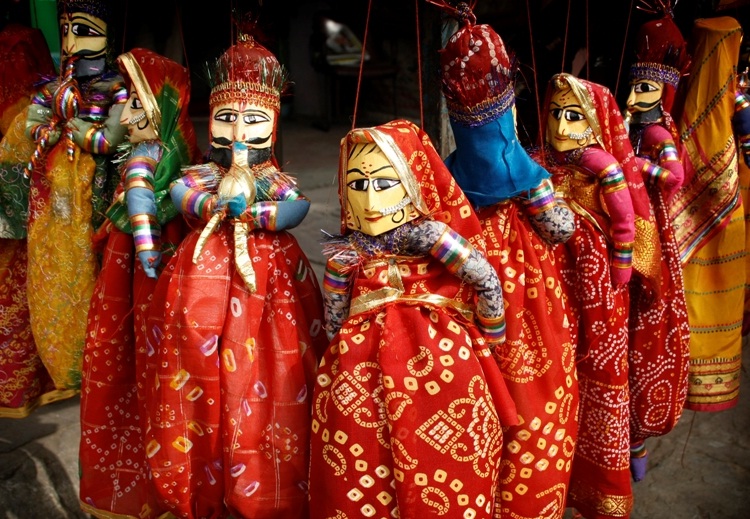
Origin: Bhat tribal community
Costume: Rajasthani clothing, flowing dresses, embroidered shirts, and turbans.
Performance Structure: Story telling through string puppetry
Popular In: Marwar region Kathputli is a famous puppet dance show in Rajasthan where puppetry, storytelling, and folk music are combined together. The puppets are controlled and manoeuvred by the puppeteers via strings attached to the puppets’ limbs. Bhartiya Lok Kala Mandal in Udaipur and Rupayan Sansthan in Jodhpur are both noteworthy institutions working to preserve and promote the art of Kathputli.
8. Chang: Centrepiece Of Holi Festival
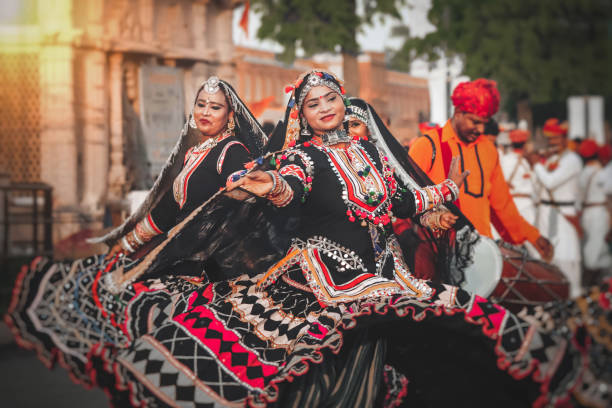
Origin: Shekhawati Region
Costume: Red-black garments
Performance Structure: Men dance to fast-paced steps
Popular In: Bikaner, Churu, Jhunjhunu, and Sikar
Chang, also known as Dhamal is one of the enthusiastic Rajasthani Dance forms performed on fast-paced rhythmic beats of the chang instrument (a type of tambourine). This dance form is performed from the start of the Maha Shivaratri festival to the end of Dhulandi (the day after Holi) to celebrate the defeat of good over evil.
9. Dandiya: Performance With Sticks
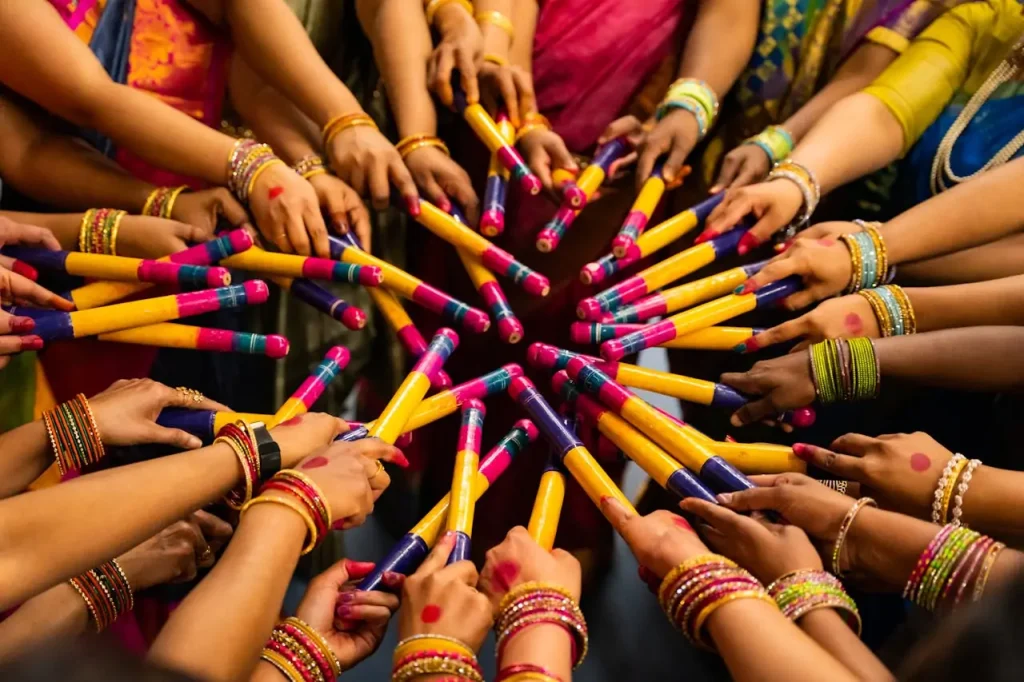
Origin: Saurashtra Region
Costume: Chaniya Cholis for women and Kedias or Kurta-pyjamas for men
Performance Structure: People in pairs move in circular formations, tapping bamboo sticks.
Popular In: Jaipur
Dandiya is a colourful folk dance form of Rajasthan where both men and women perform it with sticks known as dandiya. It is mostly performed during Navratri festival in honour of Goddess Durga and Lord Krishna. This dance form adds more joy to the festivities and celebrations.
10. Terah Taal: Thirteen Cymbals Dance
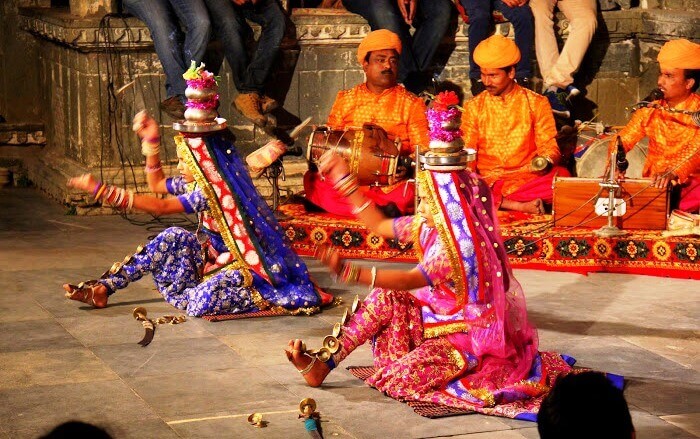
Origin: Kamada Tribe
Costume: Manjeeras (brass discs), sword and a pot
Performance Structure: Dancers move to bring out the rhythmic sounds from 13 manjeeras (brass discs) that are attached to different parts of the dancer’s body.
Popular In: Ramdevra, Dindwana, Dungarpur, and Udaipur Terah Taal is one of the ancient folk dances of Rajasthan that is performed during almost all popular festivals. The male artists play different instruments like the pakhwaja, dholak, jhanjhar, sarangi, and harmonium, and sing local Rajasthani folk songs.
11. The Fire Dance: Most Difficult And Dangerous

Origin: Bikaner District
Costume: Dhotis and turbans for men, heavily embroidered ghagra cholis for women.
Performance Structure: Breathtaking fire stunts on a flaming bed of charcoal.
Popular In: Bikaner, Jodhpur, Jaisalmer, and Jaipur
The fire dance is a dangerous and difficult Rajasthani folk dance form that depicts the lifestyles of the Jasnathis of Churu and Bikaner districts. Dancers perform this dance mostly through cold nights in winter and on festive occasions like Holi and Janmashtami. The dancers also twirl the fire rods on their heads, legs and produce flames from their mouths.
Why Experiencing Folk Dances Is Essential When Traveling
Folk dances are not just performances; they are ways of keeping history of the region alive. It also helps keep the moral and ethical codes intact. It’s a wonderful way of preserving or strengthening a community’s sense of place, forging their personal identity, and showing off their creativity. Benefits are as mentioned below:
- Travel provides the opportunity to have new experiences and witness different cultures.
- Interacting with people and places they call ‘home’, helps to see new destination in a light that is both new and familiar.
Also Read: Why Is Rajasthani Culture So Fascinating?
Conclusion
Rajasthan is home to numerous tribes and indigenous cultures. The several traditional folk dances of Rajasthan are a vital part of their history and their tales can often reveal a lot about the ideas, values, and knowledge gained from their ancestors. Be it the famous Ghoomar dance or the dangerous fire dance, Rajasthan’s folk dances offer an unforgettable cultural experience.
FAQs
The most famous folk dances of Rajasthan are Ghoomar, Kalbelia and Bhavai.
Essential travel tips for experiencing Rajasthani folk dance are:
– For authentic performances book cultural nights at heritage places in Jaipur, or desert camps in Jaisalmer and Jodhpur.
– Plan your visit during the festive season, primarily between October–March. The weather is also great during this time.
Top places to see traditional Rajasthani dances are in Jaipur, Udaipur, and Jaisalmer. Make sure to experience them in dedicated cultural venues, heritage hotels or desert camps.
Key musical instruments used for Rajasthani folk dance performances are Dholak, Dhol, Khartal, Nagara, Sarangi, Morchang, and Kamaicha.

Nice information about Rajasthani folk dancers….
Great capture of the beautiful Rajasthani dances. They are very colorful and elegant.
I am based in USA and like Indian Rajasthani dances a lot.